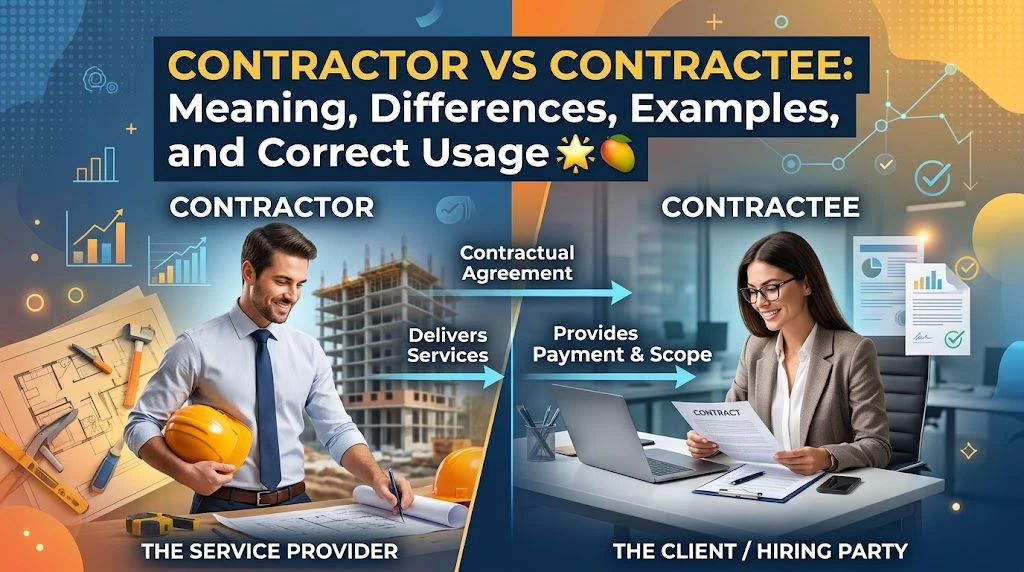
Contractor vs Contractee explains the different roles of two parties in a contract: one performs the work, while the other hires and pays for it.In most business contexts, a Contractor is a person, company, or organization that agrees to perform a specific job, provide services, or complete a project according to the terms of a contract. A Contractee is the
individual or party who hires the contractor, engages services from another party, and receives services or completed work. Many people confuse these terms in legal agreements, construction contracts, freelance projects, and other business transactions. The main contrast is
that the party responsible for performing the work is the contractor, while the party requesting work and paying for services is generally the contractee. Understanding these closely related terms and different roles helps with ensuring every contract is properly interpreted, preventing misunderstandings, and clarifying the legal roles within a contractual relationship.
In a typical agreement, the service provider or party offering services is the contractor, while the client or hiring party is the contractee. Both contract parties have contractual obligations, including job completion, service delivery, and payment responsibility. These duties are outlined in business agreements and support positive professional relationships.
Reviewing the agreement terms, work requirements, and legal interpretation clarifies contractor responsibilities and contractee responsibilities. Although the exact terms may vary, the parties should understand their duties. For example, in professional services, the contractor provides contractor services through a work agreement or service engagement and expects
compensation in return for compensation as specified by the payment terms. The contractee handles the agreed payment and other contract responsibilities. Clearly defining service provision, agreement parties, and their respective duties helps both sides meet their obligations.
What Does Contractor Mean?
A contractor is a person or company that enters into a contract to perform specific work or provide particular services.
For example, a construction company hired to build a house can be called a contractor. Similarly, a freelance writer hired to create website content may be described as an independent contractor.
Simple definition:
A contractor is the party that does the work or provides the service under a contract.
Contractor in a Sentence
- The contractor will repair the roof next week.
- The company hired a contractor to design its website.
- The independent contractor submitted the project on Friday.
What Does Contractee Mean?
A contractee is the person or organization that enters into an agreement with a contractor and receives the work, service, or performance described in the contract.
In simple terms, the contractee is usually the party that hires, engages, or receives services from the contractor.
Contractee in a Sentence
- The contractee approved the contractor’s proposal.
- The contractee must provide access to the building.
- The contractee reviewed the completed work.
The word contractee is less common in everyday English than contractor. Depending on the situation, you may also see terms such as client, customer, employer, principal, or hiring party.
Contractor vs Contractee: Key Difference
The easiest way to remember the difference is:
Contractor = performs the work
Contractee = receives or hires the service
However, the exact legal meaning can depend on the wording of the agreement and the jurisdiction.
| Term | Basic Meaning | Typical Role | Example |
| Contractor | Party performing work or providing services | Service provider | A builder constructing a house |
| Contractee | Party engaging or receiving the service | Client or hiring party | The homeowner hiring the builder |
| Client | Person or organization receiving professional services | Customer | A business hiring a consultant |
| Independent contractor | Self-employed person providing services under a contract | Service provider | A freelance designer |
| Employer | Party employing workers | Hiring organization | A company employing staff |
Therefore, if a company hires a plumber to repair its office, the plumber is the contractor, while the company may be the contractee.
Contractor and Contractee Sentence Structure

The words contractor and contractee are both nouns. They can appear as subjects, objects, or complements in English sentences.
A common sentence structure is:
Subject + verb + object
- The contractor completed the project.
- The contractee approved the work.
Another useful structure is:
Subject + hired + contractor + to + verb
- The company hired a contractor to install new equipment.
- The homeowner hired a contractor to renovate the kitchen.
You can also use a prepositional phrase:
The contractor worked for the contractee.
This sentence clearly identifies the relationship between the two parties.
Rules for Using Contractor Correctly
The word contractor is usually used for the party responsible for completing contracted work.
Rule 1: Use Contractor for the Service Provider
- The contractor installed the new windows.
- We hired a contractor to remodel the office.
Rule 2: Use Independent Contractor When Appropriate
An independent contractor normally provides services independently rather than functioning as a regular employee.
- Sarah works as an independent contractor.
- The company hired an independent contractor for the project.
Rule 3: Contractor Does Not Always Mean Construction Worker
Although contractor is strongly associated with construction, the term can describe many service providers.
Examples include:
- software contractors
- marketing contractors
- electrical contractors
- freelance contractors
- consulting contractors
- construction contractors
Rules for Using Contractee Correctly
The word contractee can be used for the party on the receiving or hiring side of a contract.
For example:
- The contractee accepted the proposal.
- The contractee was responsible for providing the necessary materials.
- The contractee paid the contractor according to the agreement.
However, contractee is not always the most natural word for everyday communication.
In business English, client, customer, company, or hiring party may sound more natural depending on the context.
Contractor vs Contractee Examples
Here are several practical examples showing the difference.
- The contractor agreed to build the office, while the contractee agreed to pay for the completed work.
- The contractor submitted the final report to the contractee.
- The homeowner hired a contractor to repair the kitchen.
- The homeowner, acting as the hiring party, may be described as the contractee.
- The contractor must follow the specifications listed in the agreement.
- The contractee must provide the information required for the project.
- The company hired an independent contractor to develop its website.
- The contractee reviewed and accepted the completed project.
- The contractor sent an invoice after finishing the work.
- Both the contractor and contractee signed the agreement.
These examples demonstrate that the two words refer to different parties in a contractual relationship.
Common Mistakes With Contractor and Contractee
English learners sometimes confuse these terms because both contain the word contract.
Mistake 1: Calling the Client the Contractor
Incorrect:
- The homeowner is the contractor because he hired the builder.
Better:
- The builder is the contractor.
- The homeowner is the client or contractee, depending on the contract.
Mistake 2: Assuming Every Contractor Is an Employee
A contractor is not automatically a regular employee.
For example:
- The company hired an independent contractor for six months.
This does not necessarily mean the person is a permanent employee.
Mistake 3: Treating Contractee as a Common Everyday Word
Although contractee is understandable and can be correct, native speakers often choose more specific terms such as client, customer, or hiring party.
Read More;Writing vs Writting: Which Spelling Is Correct
Mistake 4: Confusing Contract With Contractor
A contract is an agreement.
A contractor is a party that performs work or provides services under an agreement.
For example:
- We signed a contract.
- We hired a contractor.
Contractor vs Contractee in Business English
In professional English, these terms often appear in contracts, proposals, invoices, agreements, project documents, and legal correspondence.
A contract might state responsibilities for both parties.
For example:
Contractor responsibilities:
- Complete the agreed work.
- Follow project specifications.
- Meet agreed deadlines.
- Provide required services.
- Submit invoices according to the agreement.
Contractee responsibilities:
- Provide necessary information.
- Give access to required facilities.
- Make payments according to the contract.
- Review or approve completed work.
The exact responsibilities depend on the individual contract terms.
Contractor vs Contractee and Verb Usage
Because contractor and contractee are nouns, they commonly appear with action verbs.
Common verbs used with contractor include:
- hire
- employ
- engage
- appoint
- select
- pay
- supervise
- contract
- complete
- provide
Examples:
- The company hired a contractor.
- The contractor completed the project.
- The client paid the contractor.
- The contractor provided the requested service.
Common verbs used with contractee include:
- hire
- engage
- approve
- authorize
- pay
- receive
- accept
- review
For example:
- The contractee approved the proposal.
- The contractee received the final report.
Contractor vs Contractee and Tenses
The terms can be used with all major English tenses.
Present Simple
Use the present simple for regular duties or general facts.
- The contractor provides maintenance services.
- The contractee pays according to the agreement.
Past Simple
Use the past simple for completed actions.
- The contractor completed the project last month.
- The contractee approved the work yesterday.
Present Perfect
Use the present perfect when the action has a connection with the present.
- The contractor has completed the project.
- The contractee has approved the final design.
Future Simple
Use the future simple for future actions.
- The contractor will begin work tomorrow.
- The contractee will review the proposal next week.
These patterns are useful when learning tenses, verbs, and professional sentence structure.
Clauses and Grammar Usage
You can use contractor and contractee in simple, compound, and complex sentences.
Simple Sentence
- The contractor finished the work.
Compound Sentence
- The contractor finished the work, and the contractee approved it.
Complex Sentence
- The contractee approved the project after the contractor completed the final inspection.
Here, after the contractor completed the final inspection is a dependent clause.
You can also use relative clauses:
- The contractor who completed the project received the final payment.
- The contractee who hired the contractor approved the proposal.
Understanding these clauses can help you create clearer professional sentences.
Contractor vs Contractee: Quick Comparison
| Feature | Contractor | Contractee |
| Part of speech | Noun | Noun |
| Main role | Performs work or provides services | Hires, engages, or receives services |
| Common in business English | Very common | Less common |
| Common alternative | Service provider, independent contractor | Client, customer, hiring party |
| Typical action | Completes work | Approves or receives work |
| Example | The contractor repaired the roof. | The contractee approved the repair. |
This distinction is more useful than simply memorizing the two spellings.
Is Contractor or Contractee More Common?
Contractor is much more common in ordinary English.
You will frequently see it in:
- construction
- freelancing
- consulting
- software development
- maintenance
- engineering
- project management
- business services
Contractee is more specialized and may appear in formal, contractual, or legal writing.
In many everyday situations, a native speaker would say client rather than contractee.
For example:
Formal:
The contractee shall provide the required documents.
More natural business English:
The client shall provide the required documents.
The best choice depends on the context and the terminology used in the contract.
Conclusion
Understanding Contractor vs Contractee helps clarify the roles of both parties in a contractual relationship. A contractor performs the agreed work, provides services, or completes a project, while a contractee hires the contractor, receives the completed work, and makes payments according to the agreement. Clearly defined contractual obligations, payment terms, and work requirements can prevent misunderstandings and support successful business relationships. Whether dealing with construction contracts, freelance projects, or professional services, both parties should understand their responsibilities before entering into a contract.
Frequently Asked Questions (FAQs)
1. What is the difference between a contractor and a contractee?
A contractor performs the work or provides services under an agreement, while a contractee hires the contractor and receives the agreed services or completed work.
2. Is a contractor the person who pays for the work?
Generally, no. The contractor performs the work and receives payment, while the contractee usually pays for the services according to the contract terms.
3. Can a company be a contractor?
Yes. A contractor can be an individual, company, or organization hired to complete a project or provide specific services.
4. Is a contractee the same as a client?
In many situations, yes. A contractee is often the client or hiring party that engages a contractor, although the exact legal meaning can depend on the contract and applicable law.
5. What are the main responsibilities of a contractor?
A contractor generally must perform the agreed work, meet project requirements, provide the specified services, and follow the terms of the contract.
6. What are the responsibilities of a contractee?
A contractee generally explains the work requirements, agrees to the contract terms, provides necessary information or access, and pays the contractor as agreed.
7. Why is it important to understand contractor vs contractee?
Understanding these roles helps both parties identify their obligations, clarify payment responsibilities, reduce misunderstandings, and maintain a professional working relationship.
8. Can a contractee also be a company or organization?
Yes. A contractee can be an individual, business, company, or organization that hires a contractor to perform work or provide services.